
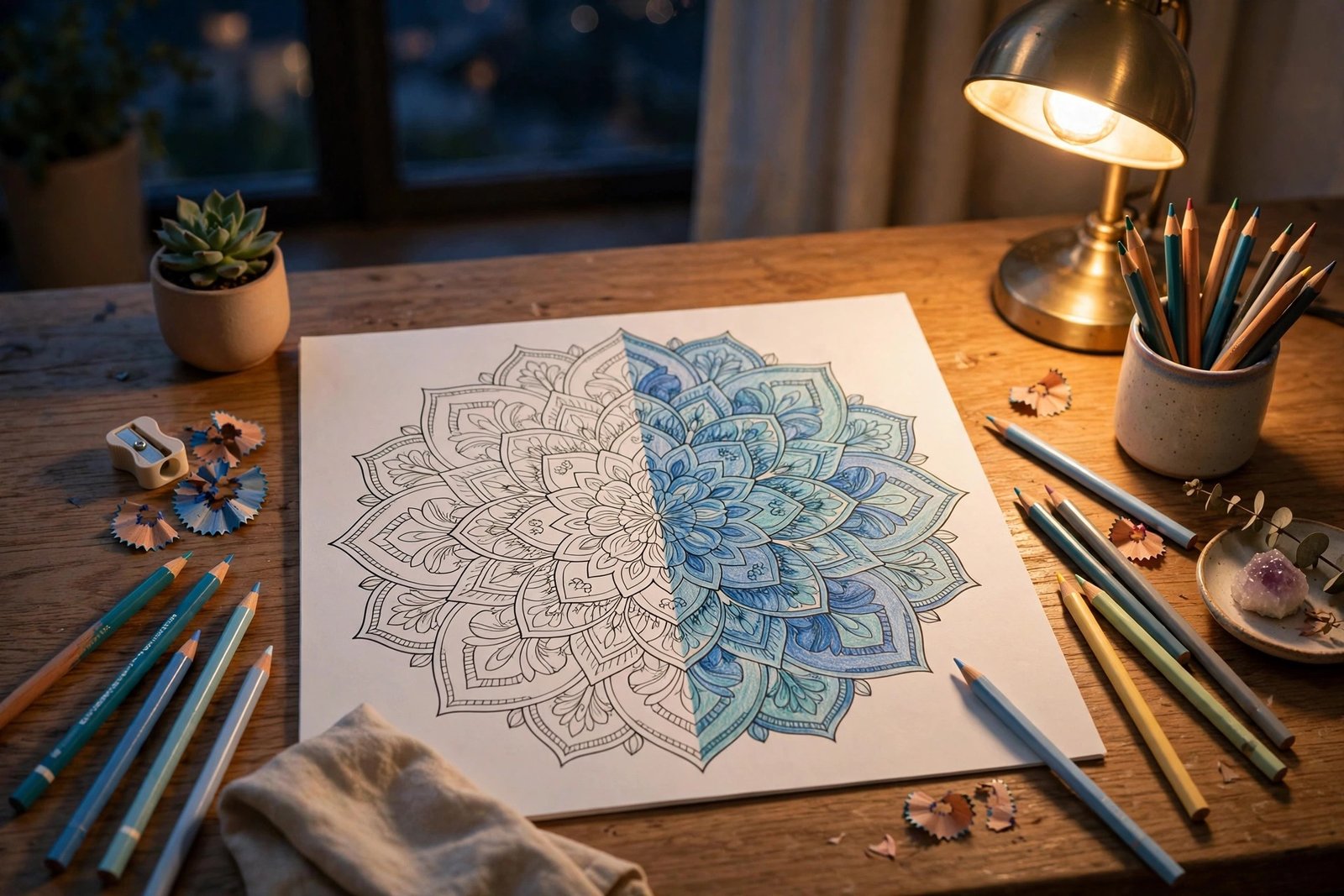
Some evenings, your mind just will not slow down. The emails are answered, the dishes are done, and the house is finally quiet, but your thoughts keep replaying the day on a loop. You pick up your phone to unwind, and twenty minutes later you feel more wired than before. If that sounds familiar, there is a simpler, slower way to end the day, and it starts with a circle.
Mandala coloring for stress relief has become a favorite evening ritual for millions of adults in the United States, and for good reason. A mandala is a circular design built from repeating patterns that grow outward from the center, and coloring one gives your busy mind something gentle to focus on. There is no deadline, no score, and no wrong answer. You simply choose a color, fill a shape, and let the next shape guide you. Many people find that this slow, repetitive rhythm helps them breathe more slowly, loosen tight shoulders, and finally feel like the day is done.
If you want a book full of beautiful circular designs to start with, take a look at the Mandala Coloring Book by Zira Vale on Amazon. It is a wonderful place to begin a calming routine, and you can also explore all of Zira Vale’s books on her Amazon author page if you want to build a small collection for different moods.
Why Circular Patterns Feel So Calming
There is something deeply satisfying about a circle. Unlike a blank page, which can feel intimidating, a mandala gives you a clear starting point: the center. From there, the pattern unfolds in rings, petals, and repeating shapes, and your eye naturally follows that order. You do not have to invent anything or make a big decision. The design itself tells you where to go next, one small section at a time.
That gentle structure is part of why mandala coloring may help quiet a busy mind. When you color, your attention narrows to one small shape and one color choice. The mental chatter about tomorrow’s meeting, the grocery list, or the news fades into the background, not because you are forcing it away, but because your hands and eyes are happily busy. Many people describe this as a kind of active rest. You are not asleep, and you are not working. You are simply absorbed in something pleasant, and that absorption can feel like a deep exhale.
What Mandala Coloring Can and Cannot Do
It is worth being honest about what a coloring book can do. Coloring is a relaxing hobby, not a medical treatment, and it is not a replacement for professional help if you are dealing with serious anxiety, stress, or sleep problems. What many people find, though, is that a regular coloring habit may help them unwind, may help them step away from screens, and may help them create a calmer transition between a busy day and a restful night.
Think of it like a warm bath or a quiet walk. Nobody expects a bath to fix everything, but most of us know how much better we feel after one. Mandala coloring works the same way, giving you a pocket of calm in an otherwise noisy day.
How to Start: Your First Mandala Session
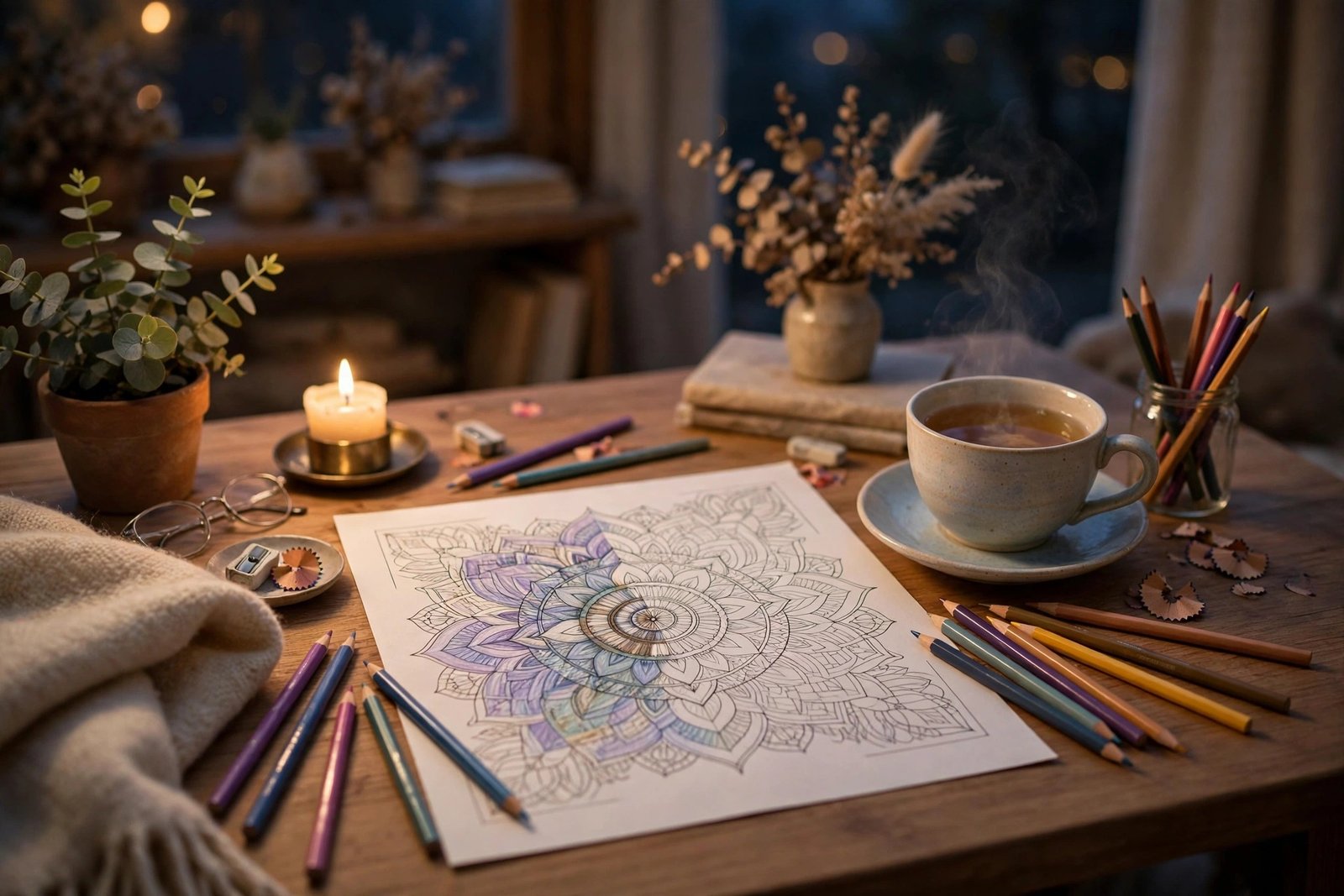
Starting is delightfully simple, and you do not need fancy supplies. A coloring book, a set of colored pencils, and a comfortable chair are enough. Colored pencils are a great first choice because they are quiet, forgiving, and easy to control. You can shade lightly for a soft look or press harder for rich color, and you can layer one color over another to create depth.
Pick a design that feels inviting, not overwhelming. If you are brand new, look for a mandala with larger, open shapes rather than the tiniest, most detailed pattern in the book. Flip through the pages slowly and notice which one catches your eye. The design you actually want to color will always beat the design you think you should color.
For step-by-step technique, our guide to how to color mandalas step by step walks through choosing a starting point, building color from the center outward, and blending shades for a smooth finish. It is a helpful companion if you want a little more structure for your first few pages, and it pairs nicely with the routine below.
When you sit down, give yourself permission to color imperfectly. You do not need to stay perfectly inside the lines, match colors exactly, or finish the whole page in one sitting. In fact, leaving a mandala unfinished can be a gift. It means you have something peaceful waiting for you tomorrow, and you can return to it without any pressure to start something new.
Choosing Calming Colors That Soothe Your Mind
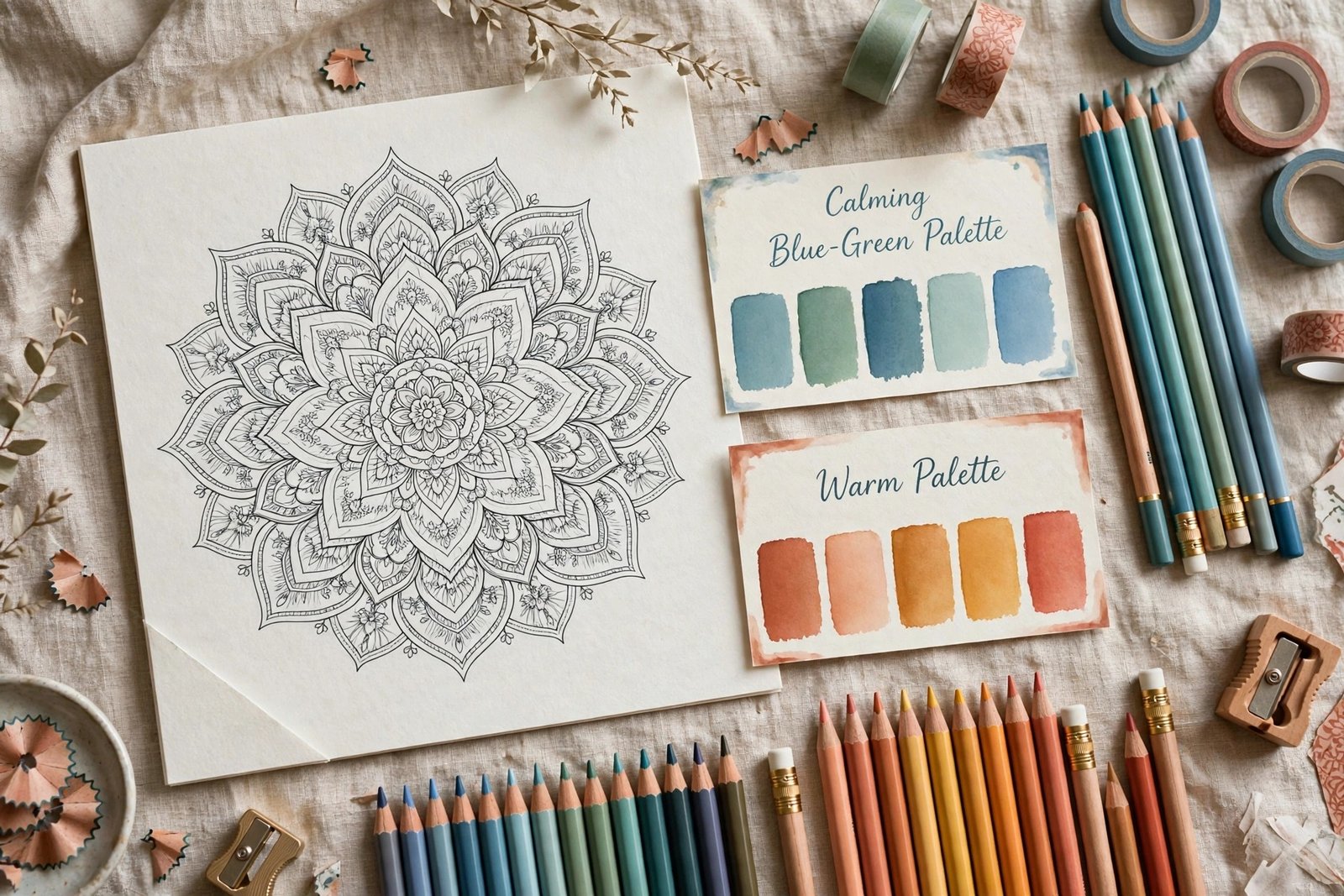
Color choice is one of the most enjoyable parts of mandala coloring, and it can shape how a session feels. If your goal is to wind down, try starting with a limited palette of three or four colors instead of reaching for every pencil in the box. A small palette keeps decisions easy, and the finished page tends to look more harmonious and restful.
Cool palettes are a classic choice for evening coloring. Soft blues, seafoam greens, dusty teals, and gentle lavenders often feel like a deep breath. Try coloring the center of your mandala in a pale blue, then moving outward through deeper blues and greens, with a touch of silver-gray or soft white for contrast. The result looks like cool water or a quiet evening sky, and many people find that kind of palette especially calming after a loud, bright day.
Warm palettes can be just as soothing, especially in fall and winter. Peaches, warm golds, soft terracotta, and muted rose tones feel like candlelight and cozy blankets, perfect for a chilly evening curled up with tea.
If you love learning how colors blend and shade, you may also enjoy our guide to blending and shading flower coloring pages. The same layering and blending techniques apply to mandalas, and they can help you create soft gradients that make a simple design look truly stunning.
The 20-Minute Evening Routine That Works
The best calming routine is one you will actually do, so keep it short and simple. Twenty minutes is plenty. Set a gentle timer if you like, or simply color until your tea is finished. The goal is a pleasant ritual, not another task on your to-do list.
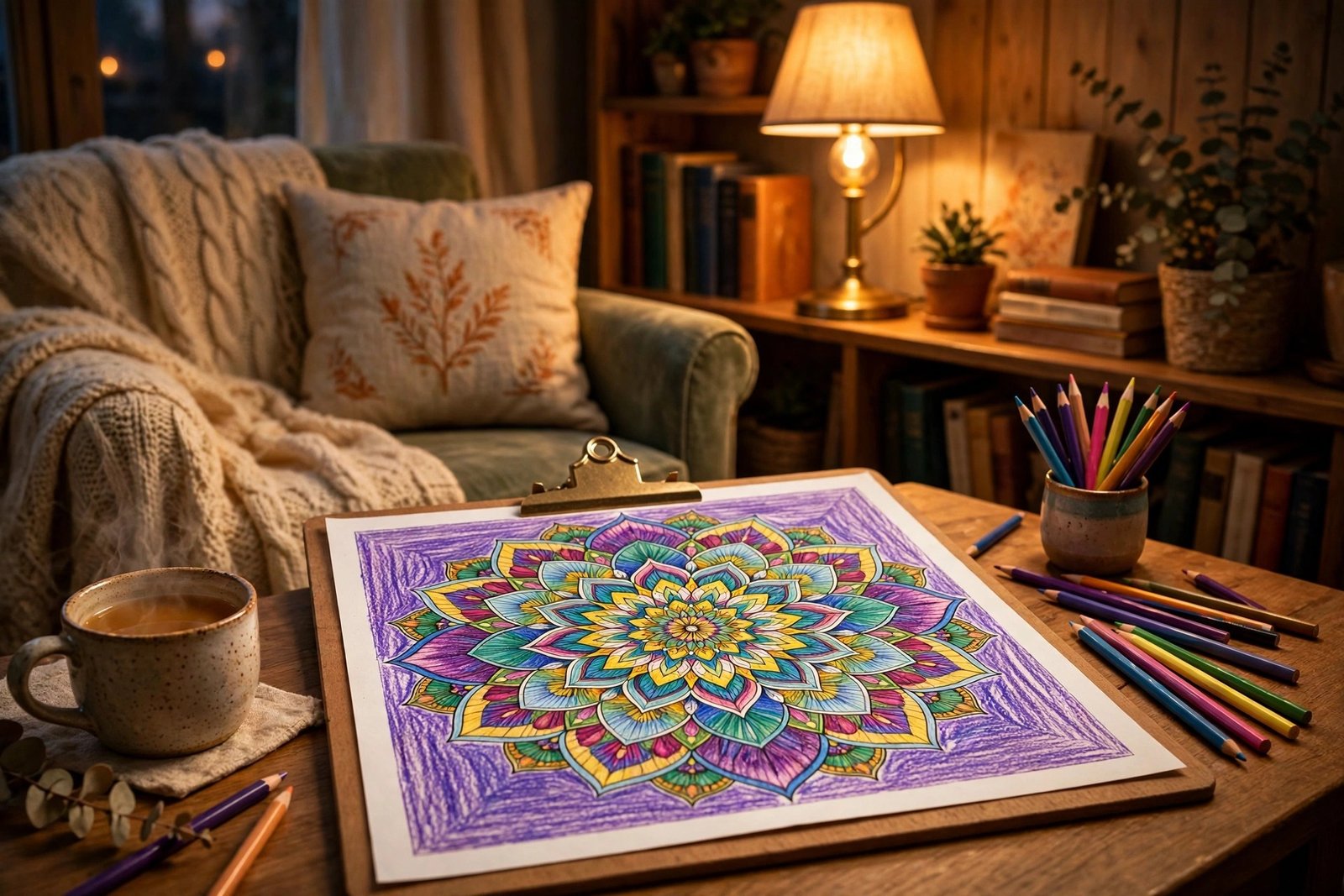
Start by putting your phone in another room or turning it face down. This single step may help more than anything else, because it removes the buzzes and notifications that keep your mind in work mode. Then make a warm drink, light a candle or a small lamp if you enjoy soft light, and settle into a comfortable spot. Some people love a desk, while others prefer an armchair with a lap desk or a clipboard. There is no correct setup. The right one is the one where your shoulders drop and your breathing slows.
Begin at the center of your mandala and work outward, one ring at a time. Color slowly, without rushing to finish. If your mind wanders to tomorrow’s worries, that is completely normal. Just notice it, and bring your attention back to the shape under your pencil.
After about ten minutes, pause and stretch your hands and neck. Roll your shoulders, take three slow breaths, and look at how far your page has come. That small moment of appreciation is part of the ritual. You are not just coloring a page. You are teaching yourself to notice progress, to enjoy a quiet moment, and to end the day with something you made with your own hands.
When your twenty minutes are up, stop wherever you are. Mark your place, close the book, and move on to your normal bedtime routine. Many people find they fall asleep more easily after coloring, because their minds have already shifted out of problem-solving mode and into rest mode.
Common Mistakes That Steal the Calm
A few common habits can quietly turn a relaxing activity into a stressful one, and they are easy to avoid once you notice them. The first is perfectionism. If you catch yourself erasing, restarting, or criticizing your color choices, pause and remind yourself that nobody is grading this page. A slightly wobbly line or an unexpected color combination is not a failure. It is proof that a real person made something real, and that is part of the charm.
The second mistake is coloring while multitasking. If the television is blaring or the news is playing, your mind never gets the quiet it needs. Try to protect your coloring time as screen-free time, with gentle instrumental music or silence.
The third mistake is choosing supplies that frustrate you. Scratchy pencils, markers that bleed, or pages that tear can turn a peaceful evening into an annoying one. You do not need the most expensive supplies, but a decent set of colored pencils and a book printed on sturdy paper makes a real difference.
Beyond the Page: Displaying, Gifting, and Journaling
Finished mandalas deserve more than a closed book. Frame a favorite page, hang it on the fridge, or prop it on a shelf. Seeing your own colorful mandala in your home can be a small daily reminder that you made time for yourself.
Colored mandalas also make thoughtful, personal gifts. A finished page tucked into a birthday card, or a small framed mandala for a friend going through a hard time, carries a warmth that a store-bought card cannot match. If you enjoy creative gifts, you may also like our guide to how to color fashion illustrations, which explores a different style of coloring for days when you want a change from circular patterns.
Building a Habit That Lasts
Like any good habit, mandala coloring works best when it is easy to start. Keep your book and pencils somewhere visible and inviting, not buried in a closet. A basket by your favorite chair, or a corner of your desk that is always set up, removes the biggest barrier, which is simply getting started. When the supplies are within reach, a ten-minute session can happen on even the busiest evening.
Pair coloring with something you already do every night. Color while your tea steeps, after you change into comfortable clothes, or right before you read in bed. This kind of pairing, sometimes called habit stacking, helps the new routine stick because it rides along with an existing one. Before long, you may find that you reach for your coloring book as automatically as you reach for your evening tea.
It also helps to lower the bar on hard days. On a truly exhausting evening, tell yourself you will color just one shape, or just five minutes. Often, once you start, you will want to keep going, but even five minutes keeps the habit alive.
Final Thoughts: One Circle at a Time
A busy mind does not usually calm down because we order it to. It calms down when we give it something gentle to do, a rhythm to follow, and a quiet space to breathe. That is exactly what mandala coloring offers. One circle, one color, one shape at a time, your evening slows down, your shoulders relax, and the noise of the day fades into the background.
You do not need to be artistic, patient, or experienced to begin. You only need a book, a few pencils, and twenty quiet minutes. Start at the center, choose colors that feel good, and let the pattern carry you outward. Some nights you will finish a page. Other nights you will color a single ring and call it enough. Both are perfect, because both are time you spent caring for yourself.
Ready to start your own calming routine? Pick up the Mandala Coloring Book by Zira Vale on Amazon and color your first circle tonight. You can also visit Zira Vale’s Amazon author page to explore her other coloring books and find the perfect next design for your evening ritual. Your calmer evenings are waiting, one beautiful circle at a time.


0 Comments