

There is a particular kind of tired that a long day on screens leaves behind. Your eyes feel heavy, your attention feels scattered, and even though you have been busy all day, your brain somehow feels both wired and foggy at the same time. If that sounds familiar, the benefits of puzzle books for adults might be exactly what your evenings need. A puzzle book asks for just one thing at a time, it rewards patience instead of speed, and it gives your mind something satisfying to chew on that has nothing to do with notifications, headlines, or an endless feed.
Puzzle books have quietly become one of the most popular screen-free hobbies for adults, and it is easy to see why. They are inexpensive, portable, and easy to pick up for ten minutes or settle into for an hour. You do not need an app, a subscription, or a charger, just a pencil and a comfortable chair. Mystery puzzle books add one more ingredient that plain puzzle collections often miss: a story. You are not only filling in a grid or circling words, you are also figuring out who did it and which clue matters.
If you are ready to try one, a good place to start is the full collection by Zira Vale on Amazon. You can browse all of Zira Vale’s books on Amazon and pick the style that sounds most like you, whether that means logic grids, room-by-room deductions, clue-based mysteries, or word searches with a whodunit twist. Each book stands on its own, so there is no need to read them in order, and there is no wrong first pick. The only real question is which kind of puzzle makes you want to turn the page.
1. Puzzle Books Support Sharper Everyday Thinking
The first benefit most adults notice is also the most practical one: puzzles exercise the kind of thinking you use every day. A logic puzzle asks you to hold several facts in mind at once, compare them, and rule out what cannot be true. A mystery puzzle asks you to weigh evidence, spot a contradiction, and resist jumping to the most obvious suspect. Those are the same mental moves you use when you plan a busy week, compare two options before a big purchase, or untangle a confusing email thread at work. Puzzles do not promise to make you smarter overnight, but regular practice may help keep those everyday reasoning skills feeling sharp and flexible.
What makes puzzle books especially useful is that they train thinking in small, complete rounds. A single puzzle has a beginning, a middle, and a satisfying end, which means you get regular practice at following a problem all the way through. That is different from scrolling, where you start a dozen things and finish none of them. Over time, many solvers find that they get better at slowing down, rereading a clue, and checking their work before deciding. If you are new to logic grids, our guide to logic grid puzzles explained for beginners walks through how the grids work, so you can start with confidence instead of guessing.
Mystery puzzles add a layer of story reasoning on top of pure logic. You might need to notice that a suspect’s alibi does not match the timeline, or that a small detail mentioned early in a case quietly changes everything later. For a closer look at how the two styles differ, see our comparison of whodunit puzzles versus logic grid puzzles. Either way, the habit being built is the same: pause, look at the evidence, and think before you answer. That is a skill that travels well beyond the page.
2. Puzzles Train Focus in a Distracted World
Focus is the benefit adults mention most often, and it makes sense. Most of our days are built around switching tasks: a message pops up while you are reading, a video autoplays while you are cooking, and a tab you meant to close an hour ago is still waiting. A puzzle book works the opposite way. It gives you one problem, one page, and no interruptions unless you invite them. To solve it, you have to stay with a single thread of thought for longer than a few seconds, and that sustained attention is a skill many of us rarely get to practice anymore.
That practice may help in surprisingly ordinary ways. People who solve puzzles regularly often say they find it easier to read a long article without checking their phone, to follow a complicated recipe without losing their place, or to stay with a work task until it is actually finished. The puzzle itself teaches the rhythm: read the clue, test an idea, notice where it breaks, and try again. There is no penalty for a wrong guess except a little erasing, which makes focus feel low-pressure rather than stressful. You are concentrating because the puzzle is interesting, not because someone is watching the clock.
It also helps that a puzzle book makes progress visible. You can see the grid filling in, the suspect list narrowing, or the word list shrinking, and that visible progress keeps your attention anchored. If your mind wanders, the page is still there waiting, without a refreshed feed pulling you somewhere else. Start with just fifteen minutes and a pencil, and let the puzzle itself hold your focus.

3. Puzzle Books Make Screen-Free Evenings Easier
Most of us know we should spend less time on screens in the evening, but knowing it and doing it are two different things. The hard part is not putting the phone down, it is finding something enjoyable to pick up instead. An empty evening quickly turns back into scrolling, because scrolling is easy and always available. A puzzle book solves that problem by giving your hands and your mind something specific to do. It replaces the habit rather than just removing it, which is why so many adults find puzzle books easier to stick with than a vague plan to simply use their phone less.
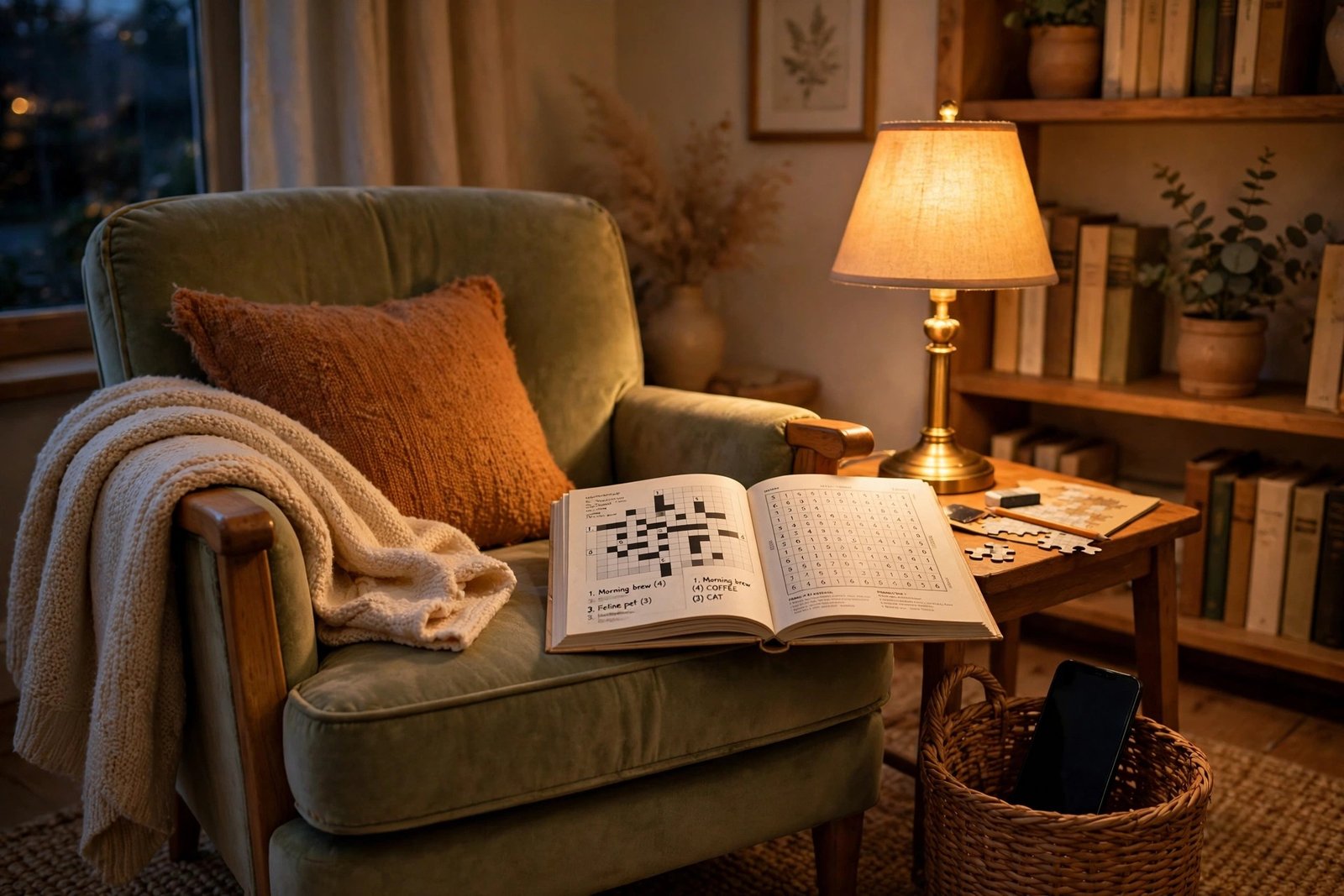
A screen-free evening built around puzzles also feels different from an evening spent watching television. Television is relaxing, but it is mostly passive: the story moves whether you pay attention or not. A puzzle asks you to participate. You are the one making decisions, testing theories, and feeling the small rush of getting a clue right. That active kind of relaxation may help you wind down without the wired, restless feeling that a late night of scrolling often leaves behind. Pair it with a warm drink, a lamp, and a comfortable chair, and the evening starts to feel like a ritual instead of a gap to fill.
If you share a home with family or roommates, puzzle evenings can become a shared ritual too. One person works a logic grid while another tries a word search, or you trade theories about a mystery case out loud before checking the answer. Nobody needs to agree on a show, and nobody is staring at separate screens in the same room. For more ideas on building that kind of evening, our guide to the best murder mystery puzzle books for adults can help you pick a first book that suits the way you like to unwind.
4. Puzzles Offer a Calmer, Low-Pressure Way to Unwind
Not every relaxing hobby actually relaxes you. Some hobbies come with leaderboards, streaks, timers, or a feed full of other people’s progress, and it is hard to unwind when you feel like you are falling behind. Puzzle books have none of that. There is no score chasing you, no daily streak to protect, and no one else’s finished puzzle making yours look slow. You set the pace, you skip a puzzle that does not appeal to you, and you come back tomorrow without losing anything. That low-pressure quality is a big part of why puzzle books support calmer evenings for so many adults.
There is also something soothing about the physical act itself. Turning a real page, writing in pencil, and circling a found word are small, tactile pleasures that screens cannot quite copy. Many solvers describe puzzle time as gentle focus, where the mind is busy enough to let go of the day’s worries but not so busy that it feels like work.
Word searches deserve a special mention here, because they are often the most calming puzzle of all. There is no complex deduction required, just the steady, satisfying hunt for hidden words, which makes them a wonderful choice for nights when your brain is too tired for a hard logic grid. If you are curious about how the mystery version works, our guide to how murder mystery word searches work explains the format, including how each search ties back to a case. On a truly tired night, an easy word search and a cup of tea may be all the evening needs to be.
5. Puzzle Books Are a Hobby You Can Share and Gift
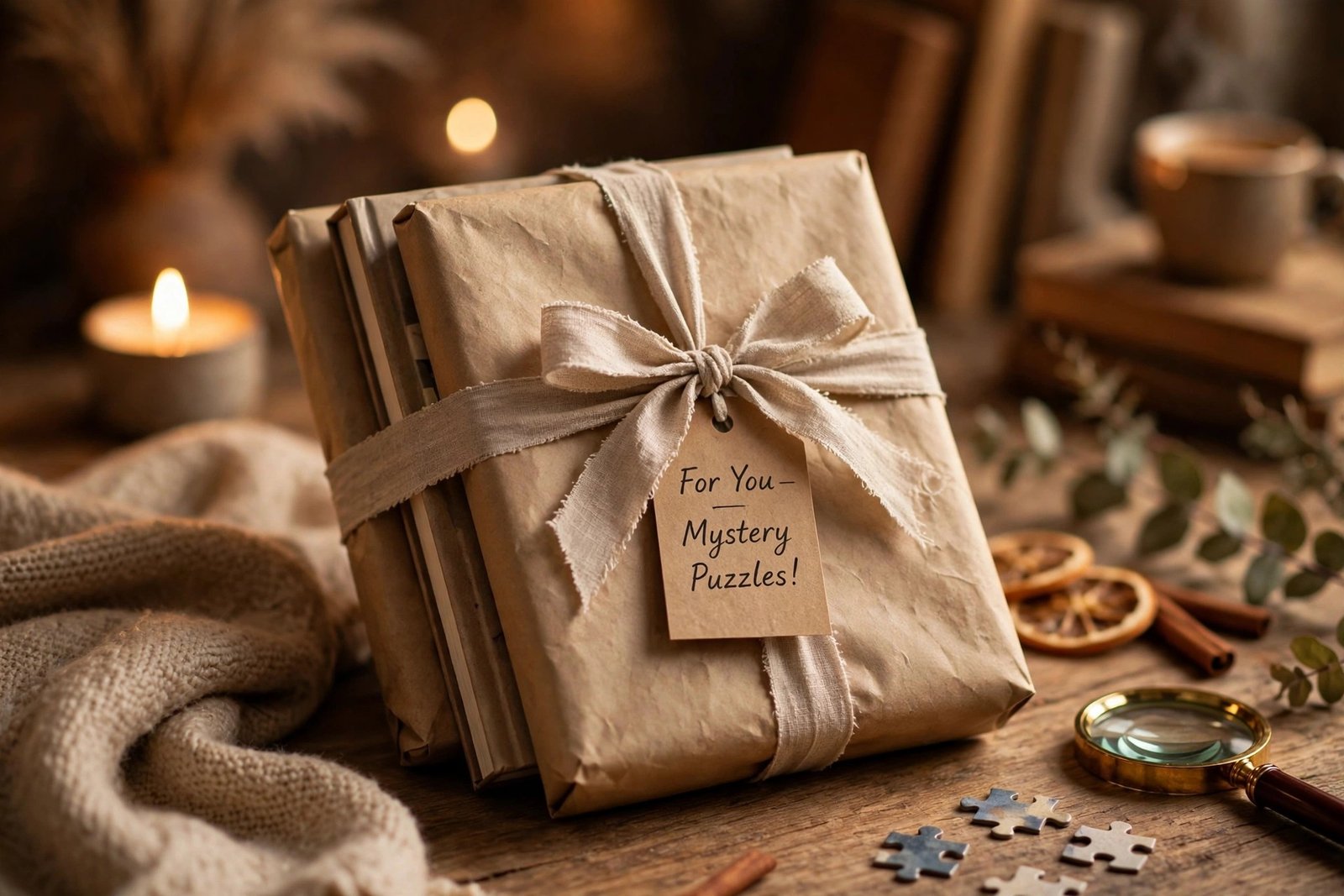
The fifth benefit is easy to overlook, but it might be the one that keeps puzzle books on your shelf the longest: they are wonderfully shareable. A puzzle book makes a thoughtful gift because it says something specific about the person receiving it. It says you know they love mysteries, or that they enjoy a quiet evening, or that they would rather solve a case than watch another rerun. Unlike a gift card, a puzzle book feels personal, and unlike a gadget, it never needs charging, updating, or troubleshooting.
Puzzle books also travel well between people. Lend one to a friend, solve a case together over coffee, or leave one on a guest room nightstand for visitors. Families often pass a single book around, with different people tackling different puzzles, and coworkers swap recommendations the way they once swapped book recommendations. Because each book contains dozens of puzzles, one gift can provide weeks of evenings rather than a single night’s entertainment. It is a small gift with a long afterlife, and that is a rare combination.
How to Start Tonight: Pick the Right Mystery Puzzle Book for You
Starting is the easiest part, because there is no homework and no setup. Pick a book that matches your mood, find a pencil with a good eraser, and give yourself permission to start with the easiest puzzle in the book. There is no rule that says you must begin on page one or finish every puzzle in order. Many solvers jump around, saving the hardest cases for a weekend and using gentler puzzles for weeknights. The goal is an evening you enjoy, not a test you pass.
If you love careful deduction, start with The Scene Keeps Secrets on Amazon, which offers 80 cases built around observing details and reasoning through them. If you prefer working through a case room by room, The Guilty Square on Amazon offers 80 room-grid cases with a structured, grid-based approach. If you like following clues and accusations as a story unfolds, When Clues Accuse on Amazon offers 90 puzzles in that style. And if you want something gentler, or a book with 3 difficulty levels you can grow with, One Word from Murder on Amazon offers 100 word searches with a murder mystery twist.
A few small habits make the first week easier. Keep the book and a pencil in the same spot every evening, so you do not have to decide where to start. Set a soft stopping point, like finishing one puzzle or solving for twenty minutes. And keep your phone in another room, or at least face down and silent, while you solve.
Final Thoughts: Tonight Is a Good Night for One Puzzle
The benefits of puzzle books for adults come down to something simple: they give your brain a better way to spend an evening. They support sharper thinking without feeling like homework, they train focus without a timer or a scoreboard, they make screen-free evenings genuinely enjoyable, they offer a calmer way to unwind, and they make a gift that people actually use. No single hobby can fix a stressful week, and puzzle books do not promise to. But as a nightly habit, they are one of the easiest, most affordable ways to trade a restless evening of scrolling for an evening that ends with a solved case and a satisfied mind.
So tonight, instead of reaching for your phone out of habit, reach for a pencil instead. Pick one case, one grid, or one word search, and see how it feels to end the day with a small, complete victory. You can explore all of Zira Vale’s mystery puzzle books on Amazon and choose the one that sounds most like your kind of evening. Your brain, your eyes, and your tomorrow-morning self may all thank you for it.


0 Comments