

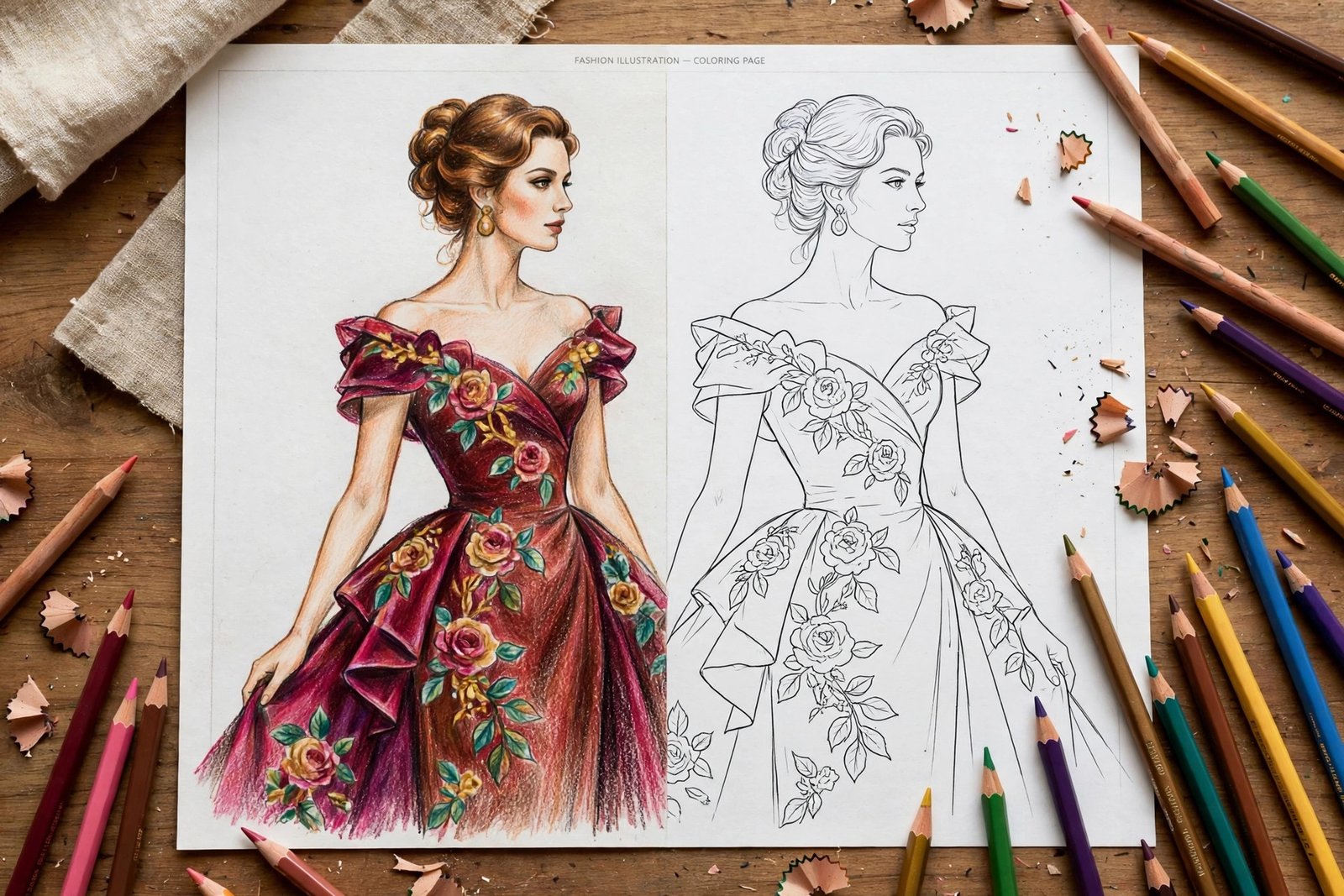
A flower coloring book for adults gives you a simple creative space to work with petals, leaves, botanical shapes, and color combinations. Unlike a blank sheet of paper, a detailed floral illustration already provides the structure, so you can focus on choosing colors, building contrast, and creating your own finished artwork.
Flower-themed coloring is especially flexible because the same page can look completely different depending on the palette. A rose can become soft and romantic, a sunflower can feel warm and bright, and a botanical bouquet can take on a calm vintage look with muted colors.
Why Flower Coloring Is a Good Creative Practice
Floral illustrations give you many small areas to practice color control. Petals can be layered from light to dark, leaves can use multiple shades of green, and flower centers can become strong focal points.
For beginners, flowers are also useful because you can start with simple flat colors and gradually add shading as your confidence grows.

Start With a Simple Floral Color Palette
Before coloring, choose three to five main colors. A limited palette can make the finished page look more coordinated and makes it easier to decide what color belongs where.
- Soft garden palette: blush pink, lavender, sage green, cream
- Warm botanical palette: coral, terracotta, mustard, olive green
- Classic floral palette: red, deep green, cream, soft yellow
- Cool garden palette: blue, violet, mint, soft gray
- Vintage palette: dusty rose, muted teal, warm beige, brown
How to Add Depth to Flower Petals
One easy technique is to begin with a light base color and gradually build darker color toward the center or underneath overlapping petals.
For example, a pink flower can start with a pale pink base, followed by a medium pink near the petal folds and a deeper rose tone close to the center. Leave a small lighter area toward the outer edge to suggest the direction of light.

Try Different Styles of Flower Coloring
Realistic Flowers
Use natural color families and gradual shading. Roses, peonies, lilies, and sunflowers are good subjects for practicing realistic color transitions.
Bold Botanical Art
Use stronger colors and clear contrast. You can make leaves deep green, blue-green, or even unusual colors when you want a more artistic result.
Vintage Floral Style
Muted colors such as dusty pink, cream, olive, faded blue, and warm brown can give a modern floral page a classic feel.
Fantasy Flowers
There is no rule that flowers must use realistic colors. Try purple leaves, blue roses, turquoise petals, or a completely unexpected combination.
Use Colored Pencils for Layering
Colored pencils are particularly useful for flower coloring because you can build color gradually. Start lightly, then add another layer where you want stronger saturation.
For a simple three-step petal technique:
- Apply a light base color over the entire petal.
- Add a darker version of the same color near folds and the flower center.
- Blend the transition with lighter pressure and add a small highlight if needed.
Color the Same Flower More Than Once
One of the best exercises is to repeat the same flower with different palettes. Create one soft version, one bold version, and one seasonal version.
This lets you see how much color changes the personality of the same illustration. It is also a practical way to build confidence with color combinations before moving to more complex pages.

Build a Relaxing Flower Coloring Routine
You do not need to finish an entire page in one sitting. Choose one section of a floral illustration and spend 20 to 30 minutes working on it.
- Choose a page and decide on your palette.
- Color the largest flowers first.
- Add leaves and secondary details.
- Build shadows gradually.
- Finish with small highlights and accents.
Keeping the session short can make coloring easier to fit into a busy day while still giving you time for a focused creative activity.
Final Thoughts
A flower coloring book for adults can be a useful way to practice color, shading, contrast, and composition while creating artwork that feels personal. Start with a small palette, work from light to dark, and do not be afraid to give flowers unexpected colors.
The most useful part of floral coloring is that there is no single correct result. The same line-art page can become soft, dramatic, natural, vintage, or completely imaginative depending on the choices you make.
Frequently Asked Questions
What colors work well for flower coloring pages?
Pink, red, yellow, lavender, blue, cream, sage, olive, and warm neutrals are versatile choices. You can also use unexpected colors for a more artistic style.
How can I make flower petals look realistic?
Begin with a light base color and gradually add darker tones near folds, overlaps, and the center of the flower. Keep some lighter areas to suggest reflected light.
Are flower coloring books suitable for beginners?
Yes. Beginners can start with simple floral pages and flat color, then gradually add layering, shading, and more complex palettes.
Can I use markers in a flower coloring book?
Markers can work well when the paper is suitable for them. Test a small area first because some markers can bleed through thinner coloring-book paper.
Frequently Asked Questions
What colors work well for flower coloring pages?
Pink, red, yellow, lavender, blue, cream, sage, olive, and warm neutrals are versatile choices. You can also use unexpected colors for a more artistic style.
How can I make flower petals look realistic?
Begin with a light base color and gradually add darker tones near folds, overlaps, and the center of the flower. Keep some lighter areas to suggest reflected light.
Are flower coloring books suitable for beginners?
Yes. Beginners can start with simple floral pages and flat color, then gradually add layering, shading, and more complex palettes.
Can I use markers in a flower coloring book?
Markers can work well when the paper is suitable for them. Test a small area first because some markers can bleed through thinner coloring-book paper.
0 Comments